Beams

Prolam PL8 Glulam Beams

Support for a strong and sustainable build
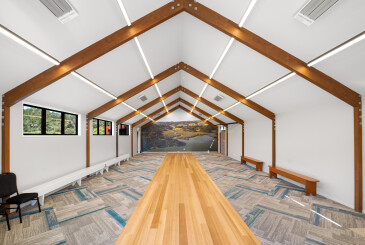
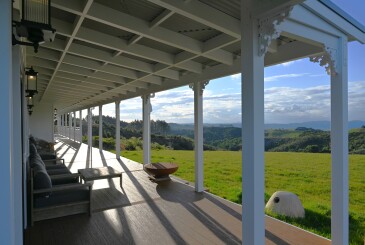
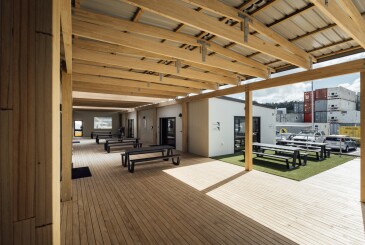
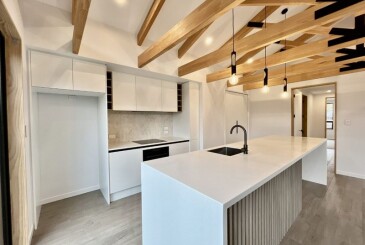
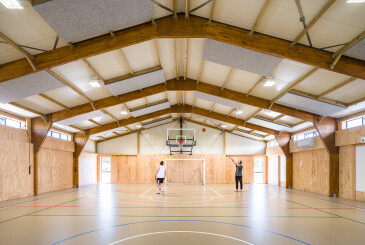
Designed and manufactured in New Zealand from select quality, sustainably grown pine, Prolam PL8 Glulam Beams combine structural integrity and durability with solid eco-credentials. Available in visual and non-visual grades in a wide range of finishes, PL8 Glulam Beams elevate architectural design and construction.

Need help selecting a PL8 beam size? Use the free online Prolam Specifier for project-specific beam sizing within the tool’s scope.

A cut above
• Solid strength and load carrying capacity
• Dimensional stability (no twisting or warping)
• Available in a variety of sizes and lengths
• Custom sizing available
• Non-visual and visual grades with a wide range of finishes
• FSC certified timber options available 

Prolam PL8 Glulam Beams are ideal for:
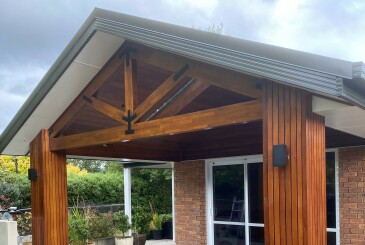
• Veranda lintels and rafters 
• Pergola lintels and rafters 
• Exposed trusses (visual grade only)
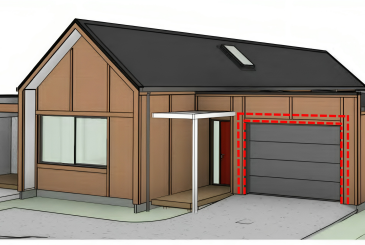
• Garage door lintels
• Deck bearers
• Deck joists
• Floor joists
• General lintels 
• Rafters

Click Here to view the full range of sizes and treatments.

Grades & Finishes

Vis Edited 2
Visual - Appearance A

This grade is intended for use in applications where appearance of the member is important and clear or painted finishes are used. All surface voids are filled, small tight knots are permitted. The surfaces are planer machined to a high quality finish. Visual finish is available in untreated as well as H1.2 and H3.2 treatments.

BSF
Bandsawn

This is only supplied in the visual grade as its used for rustic visual appearance. The roughness of the bandsawn finish may vary slightly between batches.


SS
Sanded and Sealed

This is a premium finish added to a visual product, where all blemishes are filled, the whole product is sanded and then coated with a sealer that will protect the product from ingress of moisture for 6 weeks. This sealer is not a long term sealer. The product must be sealed for the long term as per our painting/sealing requirements.

PP
Preprimed

This is a primary coat that is applied in our factory as a protective coat to stop ingress of moisture until the undercoat and top coats are applied. This primer coat is not to be used as the final finish and the product must be sealed for the long term as per our painting/sealing requirements.

Non Vis
Non-Visual H3.2 - Appearance C

This grade is intended for use in applications where appearance is unimportant. All appearance blemishes are permitted in this grade. The surfaces are machined, but machine skip is permissible and blemishes, voids and manufacturing will remain unrepaired. Loose, knots, wane, pith and open knot holes may be present.

Non Vis H1.2
Non-Visual H1.2 - Appearance C

This grade is intended for use in applications where appearance is unimportant. All appearance blemishes are permitted in this grade. The surfaces are machined, but machine skip is permissible and blemishes, voids and manufacturing will remain unrepaired. Loose, knots, wane, pith and open knot holes may be present. H1.2 Treatment is dyed pink or clear and is ONLY available in lengths up to 7.2m.

Prolam structural laminated timber beams can be used in any form of construction where the structure relies on AS/NZS 1170: 2002 and NZ 3603 1993. The design can be from the Prolam online software, span tables or specific design by an engineer using Prolam’s structural properties. All structural timber products must be stored, handled and installed in accordance with all Prolam’s installation requirements. Prolam structural laminated timber works well in harsh environments, for example in corrosive chemical stores, fell-monger, acid plants, salt-water environments and swimming pools, as it does not rust and the glues used are service class 3 certified.


Limitations on use

This laminated treated product must be protected from the elements until it is sealed. Prolam structural timber can be supplied with a temporary sealer if required. Timber naturally absorbs moisture from the surrounding environment that can cause the product to alter dimensionally. All exposed structural timber must be sealed with a good quality paint or stain system within 14 days of delivery to dramatically reduce the incidence of dimensional change and increases longevity. All cuts, holes and rebates must also be sealed to prevent the absorption of moisture.

Prolam structural timber products can be used in specific fire performance situations, and must be designed in conjunction with a fire engineer.

Building code statement of compliance 

Prolam structural laminated timber installed in accordance with the Prolam installation requirements, will comply with the below performance clauses of the New Zealand building code.

  • Structure B1/AS1: meets the requirements of B1.3.1 B1.3.2 B1.3.3 (a, b, f, j, m, q) B1.3.4 (a, b, c, d, e); AS1170:2002 for engineering span tables, AS/NZS 1328:1998 and AS5068 for building element
  • Durability B2/AS1: meets the requirements of B2.3.1(a) B2.3.2. And can be used in service class 3 situations provided H3.2 treatment or higher is used. All timber is treated in accordance with NZS3640. Prolam treats it’s own timber, and is third party audited to ensure compliance to the New Zealand treatment standard. Correct treatments must be used in the right places.
  • Protection from Fire C: APA Evaluation of Char Rate (ASTM E119), TT- 118, January 2015; meets the requirements of C6.3 C6.4. Where members are required to have a fire resistance rating the designer can use the follow standards for FRR design: TT-118 OR: NZS 3603:1993 (section 9).
  • Hazardous Building Materials F2/AS1: meets the requirements of F2.3.1. Timber treatment suppliers meet NZS3640, which includes flash-off requirements.

NZBC designed to comply

B1
Structure

B2 
Durability

B3
Protection from Fire

B4
Hazardous Building Materials

Features & Benefits

cost effective Cost Effectiveness

High weight-to-strength ratio of Prolam allows for maximum loads over large spans with the smallest possible end sections.

quality Product Quality

Prolam manufactured in accordance with AS/NZS 1328 Glue Laminated Structural Timber standard.

fire Fire Safety

Extensive fire test data shows that Prolam beams maintain structural load support for measurable periods of time in fire situations.

renewable Renewable Resource

Made from renewable New Zealand plantation timber, Prolam uses 14 times less energy to produce compared to the equivalent steel beam.

chemical Chemical Resistance
Prolam works well in harsh environments as it does not rust and the glues used are service class 3 certified.

Frequently asked questions

Lead times for Prolam engineered timber products vary depending on the product type and current manufacturing schedules.

For the most up-to-date information, refer to the lead times page on the Prolam website.
For urgent orders, contact the Prolam team directly. 

PL8 glulam is manufactured from SG8 timber, while PL12 glulam is manufactured from SG12 timber, giving it higher structural strength and stiffness.

As a result, PL12 engineered timber beams can achieve longer spans and carry greater loads than PL8. For the same span and loading conditions, a PL12 beam can often be specified in a smaller section, making it a good choice where space is limited or exposed timber aesthetics are important.

Yes. Prolam engineered timber posts and beams can be manufactured to custom sizes or lengths.
For manufacturing efficiency, custom orders are typically available for quantities of five or more.

Please contact the Prolam team to check if we can do your requested dimensions. 

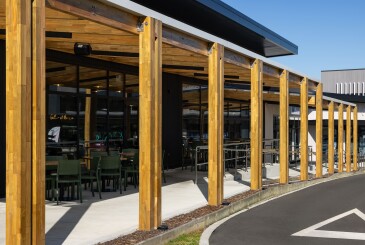
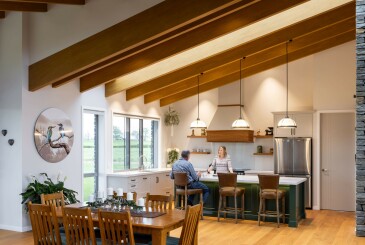
Prolam engineered glulam timber beams and trusses are suitable for both indoor and outdoor applications. Indoors, exposed timber beams and trusses add warmth and visual appeal. Outdoors, H3.2 treated glulam is designed for durability in exposed conditions and is well suited to pergolas, façades, and alfresco areas.

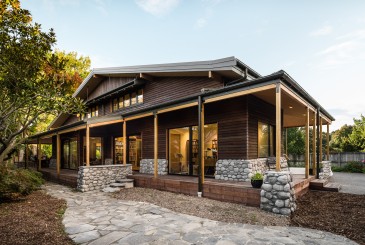
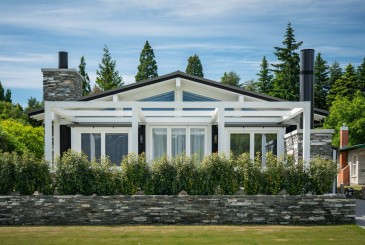
Check out our Projects page for examples of where Prolam has been used both indoors and outdoors.

The main difference between visual and non-visual grade glulam timber is the appearance finish.

Visual grade glulam timber is intended for exposed applications where the look of the timber matters and a paint or stain finish is required. Non-visual grade glulam timber is stress graded for structural use but not selected for appearance, making it best suited to concealed structural applications. 

Prolam visual grade glulam timber products are manufactured using timber selected to achieve higher-quality visual finish, then finger-jointed and laminated into glulam. It is designed for exposed timber applications where timber appearance is important, such as visible beams, rafters and trusses for interior and exterior architectural structural features. Visual grade glulam provides a high-quality machined finish suitable for painting, oiling or staining. 

Prolam non-visual grade glulam timber is graded for structural performance but is not selected or finished for appearance. It may include natural timber and manufacturing features such as knots, wane, pith, open knot holes, machining marks or unrepaired blemishes. For this reason, non-visual glulam is best suited to concealed structural applications where the timber will not be seen. 

Learn more about our finishes here.

Prolam visual-grade glulam products are available in four finishes: machined uncoated finish, pre-primed finish, sanded and sealed finish and bandsawn finish.

Learn more about our finishes here. 

Any Prolam glulam product that is exposed to the weather at any time should be coated (even if it is inside the building envelope) to prevent timber from absorbing moisture. Prolam glulam products should be kept dry with wrapping and/or cover before installed, and sealed before and during installation.

Refer to the Prolam coating requirements for further details. 

Yes, it is important to coat Prolam exposed timber before installation to prevent moisture ingress and preserve aesthetics and durability. This also applies to any cut ends or joins.

Prolam glulam can be stained using an oil or painted using an enamel paint. These products must have an LRV rating over 45%.

You can view our coating requirements and recommendations here.

Yes. Prolam glue laminated timber can be painted or stained to match the aesthetic. In fact, any exposed timber must be painted or stained with an oil based coating to preserve aesthetics and durability. This is optional for Prolam glulam timber used in internal applications.

View coating requirements here.

Prolam glulam beams and posts should not be painted with colours below a 45% LRV rating, as darker coatings can increase the risk of cracking or distortion in structural timber.

Refer to page 3 of the Prolam Coating Requirements for further information.

To maintain Prolam glulam posts, beams, and other exposed structural timber products, refer to the Prolam Coating Guidelines for full instructions on preparation, application, and recoating intervals. For additional guidance, refer to the manufacturer's coating instructions on the product packaging. 

No. Splits or openings along a glue line in Prolam glulam do not necessarily mean delamination has occurred. They are often caused by natural checking as the engineered timber responds to changes in moisture. In larger timber sections, these checks commonly occur along glue lines where the timber fibres are interrupted and can be mistaken for delamination.

Delamination is the separation of the timber from the adhesive bond. If you look into the opening, natural checking will typically show rough or torn wood fibres, whereas delamination will appear as a smooth, flat separation along the glue line. You can also check the depth of the opening by gently inserting a thin card or feeler gauge.

If delamination is suspected, contact the Prolam technical team for assessment and advice.

It is important to only use fixings for Prolam glulam timber that have been specified by the engineer's specification or PS1. Ensure galvanised or stainless options are selected depending on indoor/outdoor use and timber treatment. Don't fasten too close to edges or ends.

Common suppliers we recommend are MiTek, Pryda, Simpson Strong-Tie or SPAX.

View our fixing details here.

For MCA H3.2–H5 treated glulam timber, Prolam recommends a minimum of 304 stainless steel fasteners, nails, and screws for all exterior or exposed structural timber applications. This is because MCA treatment can accelerate corrosion in standard steel fixings, and stainless steel provides the durability needed to maintain structural integrity over the long term.

Learn more about fixing to MCA treated timber here. 

Apart from our glulam exposed truss, pergola and PLX bracing solutions which include fixings and connections, Prolam does not sell fixings. However, you can find our fixing recommendations for use with our products here.

You can purchase these at your local trade store, e.g. PlaceMakers, Carters, Mitre 10, ITM, Bunnings, BuildLink etc.

The weight of Prolam PL8 and PL12 engineered timber, treated to H1.2, H3.2 or H5, is approximately 550 kg per cubic metre.

For example, a 240 × 88 mm H3.2 PL8 member at 4.8 m length weighs around 56 kg. This is calculated as: 0.240 × 0.088 × 4.8 × 550 = 55.76 kg.

Please contact the Prolam team for weight information on PLX20 beams, PLX columns, or PLX portal systems.

Prolam posts can be used as beams, and Prolam beams can also be used as posts, provided this is confirmed by the project engineer or via the Prolam Specifier.

All applications must be designed and verified for the required load and structural timber performance.

Prolam engineered timber posts and beams are available in a wide range of sizes and lengths.
Posts range from 88 × 88 mm to 300 × 300 mm, with lengths from 2.4 m to 16 m. Beams range from 140 × 42 mm to 595 × 260 mm, with lengths from 3.6 m to 16 m.

For a full list of sizes, lengths, and product codes, view or download our Prolam Product List. 

Yes, you can drill or notch a Prolam glue laminated beam but only if it has been specifically detailed by the engineer or using the Prolam Specifier. Unapproved holes and notches can void compliance and compromise structural performance of engineered timber.

Ensure holes are small and drilled in the middle third of the span, centred vertically and never at the beam ends or where supports or fixings are required

View our design and install guide here.

H3.2 treatment can typically give timber a green tinge. However, Prolam engineered timber is machined after treatment, which removes this surface colouring and results in a light brown finish. The final appearance is often similar to H5 treated timber, depending on exposure and conditions.

Contact us to request a sample.

Prolam visual grade glulam beams are available in a range of finishes, including bandsawn, sanded and sealed, and pre-primed options, ready for oiling, staining, or painting. This flexibility allows designers to match the finish to the architectural style and application.

See our Finishes brochure for more information.

After storing in a flat and dry location and ensuring your posts and walls are level, you can begin installing your Prolam glulam beam.

Using appropriate lifting gear, move the beam into place, and then secure the beam using fasteners recommended by your engineer or Prolam. Keep heavy materials off the beam until it is secured.

For full details, Click Here to download the design and install guide.

If the glulam beam is an exterior exposed beam, ensure it is coated as per the Prolam Coating Requirements prior to installation. 

Why Choose Prolam

Engineered Structural Timber Solutions

Specify with certainty


FIND OUT MORE