Structural Timber Engineering Insights: Designing in an SED Wind Zone
SED wind zones push projects beyond standard design. We explain how to navigate the structural timber design requirements with confidence.
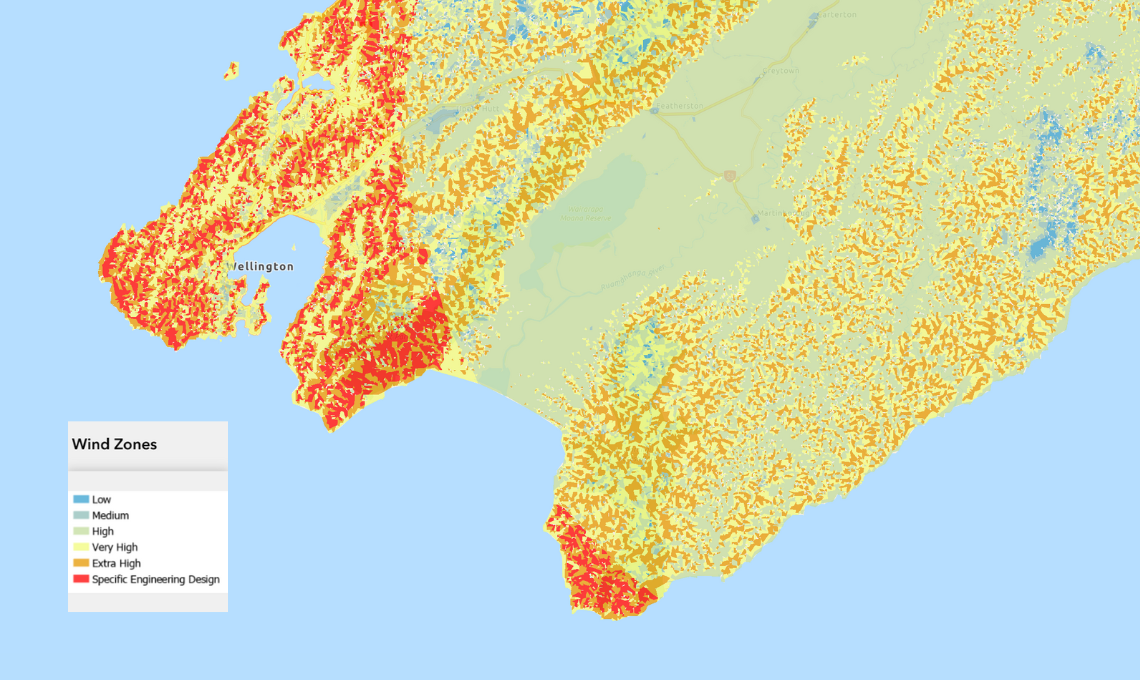
When your project falls within a Specific Engineering Design (SED) wind zone on the BRANZ Map, the wind speed isn’t the only thing that increases – the need for accurate timely engineering input does, too.
For residential buildings, councils expect robust, code-compliant evidence to support your design choices. This means your project hinges on a PS1 – Design by a structural engineer who understands both New Zealand conditions and the performance requirements of structural timber.
What the NZ Building Code requires for SED Wind Zones
Under NZS 3604, most standard building projects fall into Low, Medium, High, Very High or Extra High wind zones. But if your site exceeds the scope of 3604 – whether due to elevation, exposure, topography or extreme wind pressures – you’re in SED territory.
Key requirements include:
- Specific engineering design for all primary structural elements.
- Accurate calculation of wind actions (per AS/NZS 1170.2).
- Engineer-verified design documents (PS1) for consent.
- Appropriate material section, including strength grades, connection design and durability considerations.
- Robust lateral load paths and bracing solutions that exceed standard NZS 3604 tables.
For architects and engineers, this means more time, more complexity and more pressure on early-stage decisions. Partnering with specialists reduces risk and saves time.
Why work with a structural timber engineering specialist
Working with a team who deals exclusively with structural timber every day offers significant advantages.
1. Efficient, right-sized designs
Structural engineers who specialise in timber (in our case glulam) know how timber performs under a range of conditions – including wind – ensuring you get the most efficient member sizes and connection detailing.
2. Absolute confidence in compliance
Everything is designed in accordance with the relevant NZ standards for residential / light commercial buildings. SED wind zones require designs to follow the AS/NZS 1170 wind actions, NZS 3603 timber design rules, and the B1/VM1 verification method.
3. Faster turnaround for PS1s
Delays at consent stage can set a project back weeks. Prolam’s engineers turn around SED documentation within 7 working days, keeping projects moving.
4. Practical, buildable solutions
Because Prolam engineers work with timber every day, the solutions balance structural demands and aesthetics with construction efficiency and costs.
5. A seamless process from design to manufacture
Prolam’s engineers design using verified Prolam glulam properties, ensuring alignment between design documentation and product specification, and manufacturing.
Prolam Design Service: SED expertise on demand
The Prolam Design Services gives architects, engineers and builders direct access to experienced timber engineering specialists. Prolam’s engineering team – Zubin Karami and Farhad Darani (CPEng) – work exclusively in structural timber and know how glulam performs under loads, including the heightened requirements of SED wind zones.
They offer project-specific SEDs for: exposed trusses; complex and long-span beams; lintels, rafters and posts; bracing portals.
Built around technical certainty, timely delivery and cost-effective design fees, the Prolam Design Service is geared to support design professionals to resolve challenges early, avoid over-engineering, and progress confidently through consent to construction. Backed by clear, concise documentation and direct communication throughout the process, and assurance that designs fully align with SED wind zone requirements.
Why glulam performs exceptionally well in SED wind zones
Prolam glulam is a proven fit for high-wind design due to its:
- High strength-to-weight ratio
- Dimensional stability and predictability
From architectural spans to bracing portals, glulam delivers better efficiency, aesthetic appeal and long-term durability, with the added benefit of lower embodied carbon and a strong sustainability profile.
Need engineering support for an SED wind zone project?
Prolam is your structural timber design partner for SED wind zone projects.
If you’re designing in an SED wind zone and need a compliant and timber-smart solution – fast, Prolam’s engineering team is here to help. Find out more about the Prolam Design Service or get in touch to talk about your SED needs.