Introducing the Prolam Raking Portal: An engineered timber bracing solution for pitched roofs
When your design calls for a bracing portal to support a raked ceiling, you need a structural solution that balances architectural intent with structural performance.
Introducing the Prolam Raking Portal – the latest addition to Prolam’s innovative range of engineered timber bracing solutions.
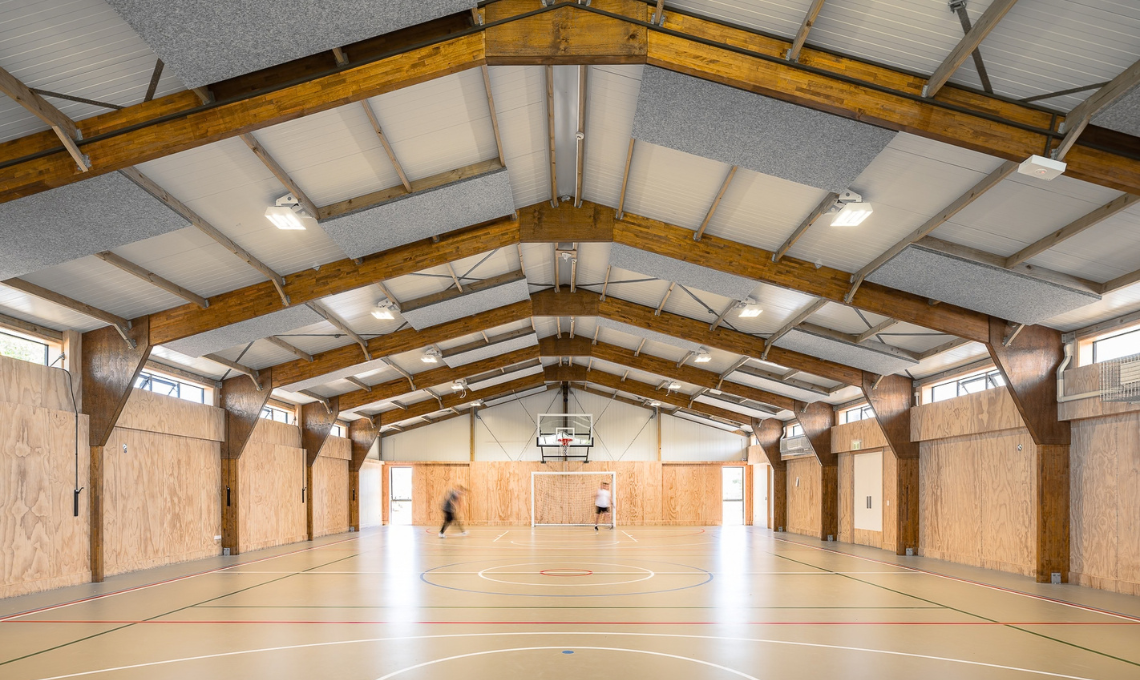
The new solution responds to a growing architectural trend. Architects are increasingly designing buildings with raked ceilings, pitched roof forms and open layouts, with seamless indoor-outdoor connections, and desire to feature the natural warmth of timber.
These designs create light-filled interiors and strong architectural expression – particularly where exposed timber structure becomes part of the design language. However, they can introduce structural challenges – when large, glazed openings, open-plan layouts and minimal wall lengths are designed – conventional bracing usually must rely on steel.
Delivered via Specific Engineering Design (SED), the Prolam Raking Portal provides a project-specific engineered timber solution that supports the design process, and is practical and buildable.
Why a Raking Portal?
A raking portal consists of vertical columns and sloping rafters that form a structural portal capable of resisting both gravity loads and lateral forces from wind, snow or earthquakes.
They are typically required for:
- Architectural homes with monopitch or cathedral ceilings
- Open-plan spaces with large openings
- Pavilion-style builds
- Light commercial and industrial buildings
In these situations, a portal frame provides the structural performance required while also delivering the desired design aesthetic.
Crafted from high-performance glulam, the Prolam Raking Portal offers a structural timber alternative to traditional steel – with the added benefits of glulam’s natural timber aesthetic, solid eco-credentials and ease of installation.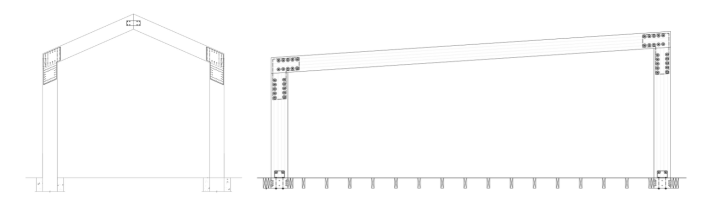
Why a Specific Engineering Design (SED) Raking Portal?
While Prolam already offers pre-engineered bracing solutions such as the PLX Portal, raking portals present a different structural challenge.
Because every project varies in terms of roof pitch, spans, loads and building configuration, a single standardised portal design would not provide the flexibility required.
Instead, Prolam developed its Raking Portal as a Specific Engineering Design (SED) solution, allowing each portal to be engineered precisely to suit the project.
This ensures the portal frame can be designed and manufactured to meet project-specific design goals and spans, and site-specific wind, earthquake and snow loads – in accordance with the New Zealand Building Code.
By taking this tailored design approach, Prolam provides designers with a structural solution that balances architectural intent, engineering rigour and construction practicality.
A wide range of Raking Portal design options
While every Prolam Raking Portal is designed for the specific project, typical parameters include:
- Clear spans up to 8m for residential and 20m for non-residential buildings
Portals are available in visual and non-visual grades, allowing the timber structure to either be exposed or concealed within the building envelope.
Designs can also incorporate Prolam’s glulam–steel hybrid PLX20 Beam and PLX Bracing Column systems where additional span capacity or bracing performance is required.
From structural timber design to installation: How the Raking Portal works
Prolam’s Raking Portal provides a coordinated pathway from engineering and design through to manufacture and supply. It also provides the option for Prolam’s in-house engineers to provide a full SED service or collaborate with project structural engineers to develop the SED Raking Portal:
- Where Prolam is engaged to undertake the SED, our structural engineering team develops the portal design and documentation to support building consent.
- Where the project engineer is undertaking the SED, Prolam can support the design process by providing structural timber expertise, predictable stiffness and material data for modelling, defined connection typologies and technical documentation.
In both cases, Prolam manufactures and supplies the complete structural timber portal solution, including glulam members, connection systems and prefabricated kitset components.
The process is straightforward:
- Submit your project details and plans via the Design Form or email the Prolam design team.
- Receive your SED portal design and consent documentation prepared by Prolam’s in-house structural timber engineers.
- Place your order through your preferred timber merchant for manufacture and supply.
Once approved, the portal components are manufactured from Prolam glulam and delivered as a prefabricated kitset, including connection systems for efficient installation on site. Timber-to-timber fixings and the build-ready kitset format make the system faster and easier for builders on site, avoiding the handling and fixing challenges that often come with steel. Compared with steel options, the timber portal also reduces thermal bridging, improving energy efficiency and indoor comfort for building occupants.
Collaborative, flexible and innovative structural timber design
Prolam’s in-house structural timber engineering team works closely with architects and project engineers to ensure that structural timber solutions integrate seamlessly into the wider building design while maintaining compliance with NZ Building Code requirements and a focus on buildability.
With decades of experience in engineered timber and local New Zealand manufacturing capability, Prolam continues to expand the possibilities of structural timber design for contemporary architecture, making it easier for project teams to deliver raked roof forms that perform, look good and are practical to build.
Ready to explore a Raking Portal for your project?
If your design includes raked ceilings, exposed timber structures or minimal wall lengths for bracing, the Prolam Raking Portal may provide the structural solution you need.
Submit your project details and plans via our Design Form and email the Prolam design team to start the process.
FAQs about Prolam Raking Portals
What is a raking portal frame?
A Raking Portal is a timber or steel frame designed to resist both gravity loads and lateral forces from wind, snow or earthquakes, consisting of vertical and sloping members forming a portal shape – used where raking ceilings (monopitch or cathedral) are required.
When would I need a raking portal?
Raking portals are typically used when a building design includes raked ceilings, either as a gable/cathedral ceiling or monopitch.
Can the Prolam Raking Portal be an exposed timber feature?
Yes. Prolam Raking Portals are available in visual glulam grades, allowing the timber structure to be exposed as part of the architectural design.
How do I request a Prolam Raking Portal design?
Submit your project details and plans via our Design Form and email the Prolam design team to start the process.
Do Prolam Raking Portals comply with the NZ Building Code?
Yes. Each portal is engineered via Specific Engineering Design (SED) to meet project- and site-specific load requirements – in accordance with the NZ Building Code.
What is the difference between the Prolam Raking Portal and the PLX Portal?
The PLX Portal is a pre-engineered bracing solution, with a flat lintel, designed for portal frame applications in residential and light commercial buildings.
It uses standardised components – including the Prolam PLX20 Beam and specially designed foot plate – and provides a fast, efficient solution where building layouts suit the standard design.
The Prolam Raking Portal, on the other hand, is delivered via Specific Engineering Design (SED).
It is used for projects that require raking or pitched portal frames, or where spans, loads and roof geometry fall outside the scope of pre-engineered systems.
Each Raking Portal is custom-engineered to suit the project’s structural requirements, while still utilising Prolam’s quality, high-performance glulam components
How do we make the ordering and supply of the Prolam Raking Portal easy for builders?
Prolam supplies the portal as a complete package through the builder’s usual merchant, with the timber and fixings bundled together rather than sourced separately.
How does the Prolam Raking Portal fit into the engineer’s SED process?
The solution supports the design process with design concepts, calculation data and industry knowledge of construction. Each portal is custom-engineered for the project’s loads, span and pitch and is backed by glulam material data and defined connection details, so engineers can slot it straight into their SED documentation and consent package.
Why is the Prolam Raking Portal easier to install than steel?
The system uses timber to timber fixings and arrives as a build-ready kitset. It avoids wrestling heavy steel on site and arrives cut, drilled, and ready to assemble with matching fixings. This speeds up framing, reduces set-up guesswork and cuts down time chasing extra hardware.
How does the Prolam Raking Portal help builders deliver a great finish?
With the structure resolved in the portal, it is easier to keep lines straight, maintain consistent ceiling planes and achieve the clean raked look shown on the plans.
Can builders use the Prolam Raking Portal exposed or hidden?
Yes, the Prolam Raking Portal can be used for visual and non-visual applications, so builders can install it as a feature in exposed timber or let it do the structural work behind the linings.
How does reduced thermal bridging help the builder’s clients?
The timber portal reduces thermal bridging compared with steel, which improves energy efficiency and indoor comfort.